No products available yet
Stay tuned! More products will be shown here as they are added.

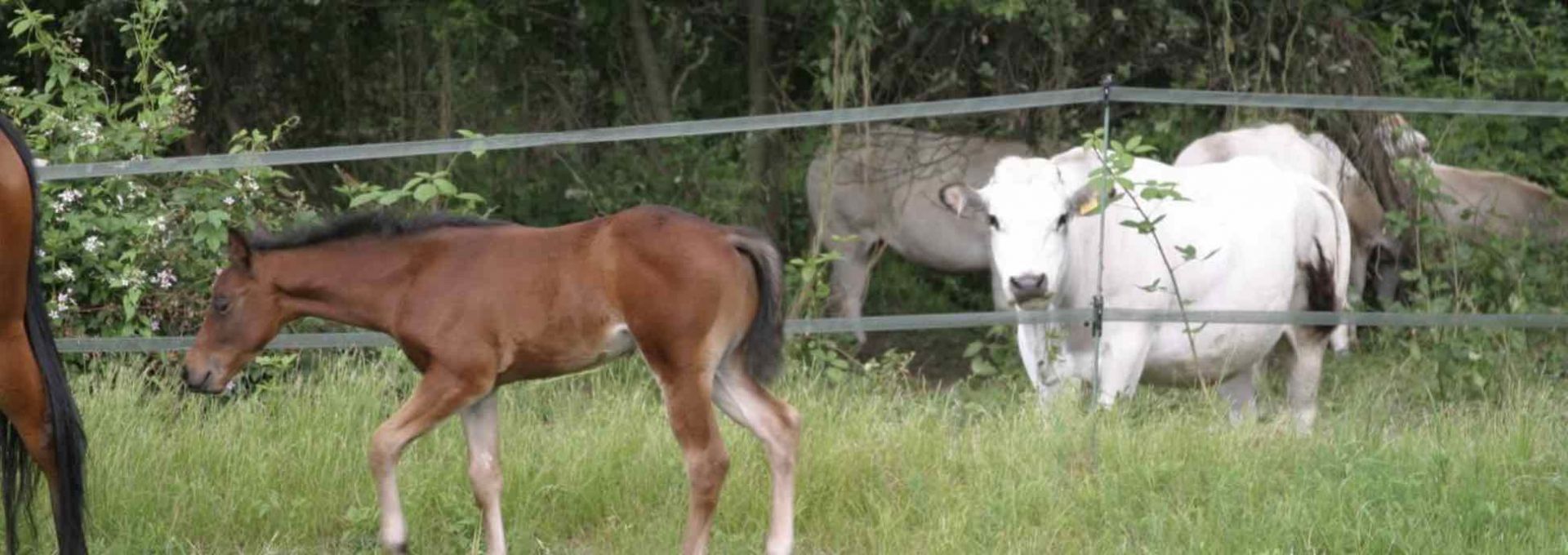
Building a mobile fence that can be assembled and disassembled during pasture movements is essential to always ensure the safety of your animals.
Potential predators will stay away even during periods of seasonal migration and alpine grazing.
In this case, it is essential to use the Shock-Resistant Safety Electrified System with the aid of light fiberglass posts Rif.7A or Rif.7C. These posts are easy and quick to install and remove without having to disassemble the insulators and tape.
How do you disassemble the fence to move it?
Once the electric current to the fence is deactivated, slide out the first post (without removing the tape and insulators) and roll it over itself until reaching the next post, proceed this way for the entire fence. You will then have all the material collected in one place, a complete "coil" with all accessories and tape that can then be easily unrolled and planted again as needed.
The same removal method applies when using Electrified Nets (for goats and sheep)
If you are thinking of building a fixed or mobile fence, ask us for a free quote, we will calculate all the necessary materials and turnkey kits for you
Why is the rural world, accustomed to using tiny low-cost current wire, becoming increasingly interested in our systems?
Simple, it's a matter of costs, because while you are forced to constantly change, replace and intervene on such precarious devices, our fences and materials are much more durable, allowing for longer amortization. Furthermore, it is increasingly important that a well-built fence creates no maintenance problems.
Whether for dairy cattle or meat animals or even better for genetically selected animals that are raised solely for breeding purposes, our system is ideal. Many farmers also use it to create corridors for milking, others use our electrification devices to power trainers.
With new community regulations, there is an increasing shift towards free-stall animal housing: the combination of our hot-dip galvanized fence panels with our shock-resistant safety electrified fences is a valid and economical solution.
DOWNLOAD OUR CATALOGUE HERE
For cattle, the fencing system does not differ at all from the one mentioned before for horses. A very important note regarding cattle is that many times adult grazing cows can be safely left with just one loop of white tape Rif. B1 or brown Rif. M1 placed at approximately 70/80 cm from the ground, with fiberglass posts, etc. For heifers or calves, two loops of tape are recommended. For bulls, three loops or, as a trainer, placing a wire with its own insulators on the bars.
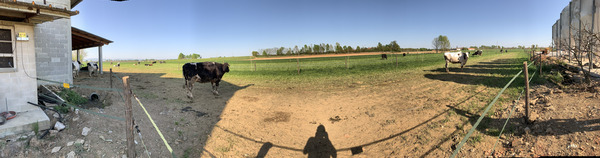
For adult grazing cows, you can even easily use just one loop of tape placed at 70/80 cm from the ground. For heifers and calves, two loops of tape are recommended, while for bulls three heights are better. In recent years we have been protagonists of an important change; until recently, the rural world accustomed to tiny low-cost current wire became increasingly interested in our systems.
But what changed? Nothing really changed, but there was simply an awakening, due to quality, because if things cost little there is always a reason, and spending less initially never means really saving money, due to constant replacements and interventions on precarious systems. But it is not just a matter of costs, but above all a matter of safety.
Very quick to install, it has low maintenance costs. The concept it is based on is not only mechanical strength, held at approximately 400kg, but the fact that the animal becomes respectful and avoids it without even touching it after the first experience with the current.
· Cattle raised in paddocks eat grass and forest undergrowth products, not industrial feeds.
· Calves stay with their mother and the herd all the time
· In paddocks they are free to go where they prefer and are not crowded on top of each other.
· In intensive farming, cows live in sheds indoors without enjoying sun and vitamin D3.
· In intensive farming, cows are filled with preventive mass antibiotics.
· While in intensive farms cows spend their entire lives within two square meters of space, in paddocks they are free to move and improve the quality of meat and milk.
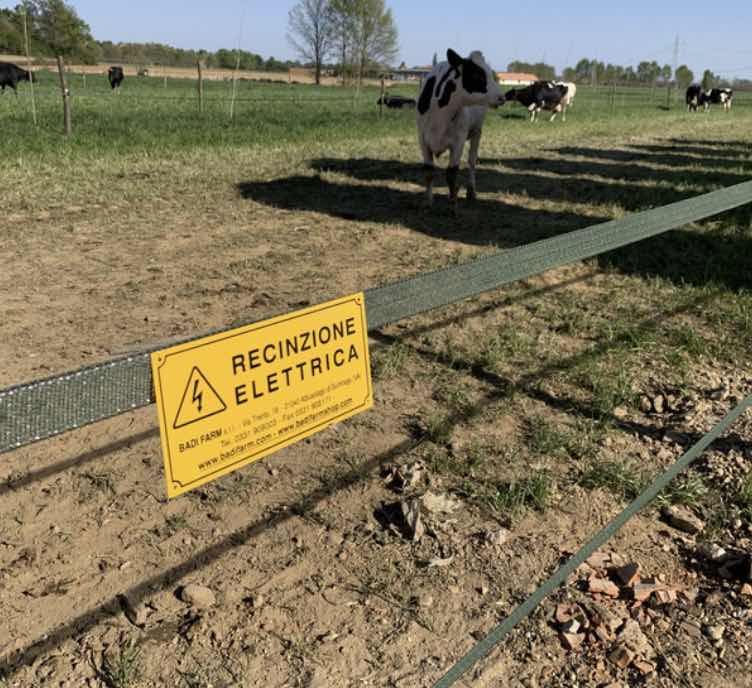
The System works in two ways:
FIRST: Electricity will sting the animal every time it attempts to approach the fence. Our electric fences, if properly installed, follow this rule. Each application has its own characteristics.
SECOND: The Visual Barrier (created by the tape) represents for the animal a clearly visible and wide obstacle, therefore difficult to overcome. Furthermore, when it tries to pass through the electrified fence, its instinct will remind it: "No, the fence there is too painful, I cannot pass through, I need to find another way out". This is why at least two or three tape heights are necessary, obviously placed at the correct height, that is 15, 30 and 50 cm from the ground!
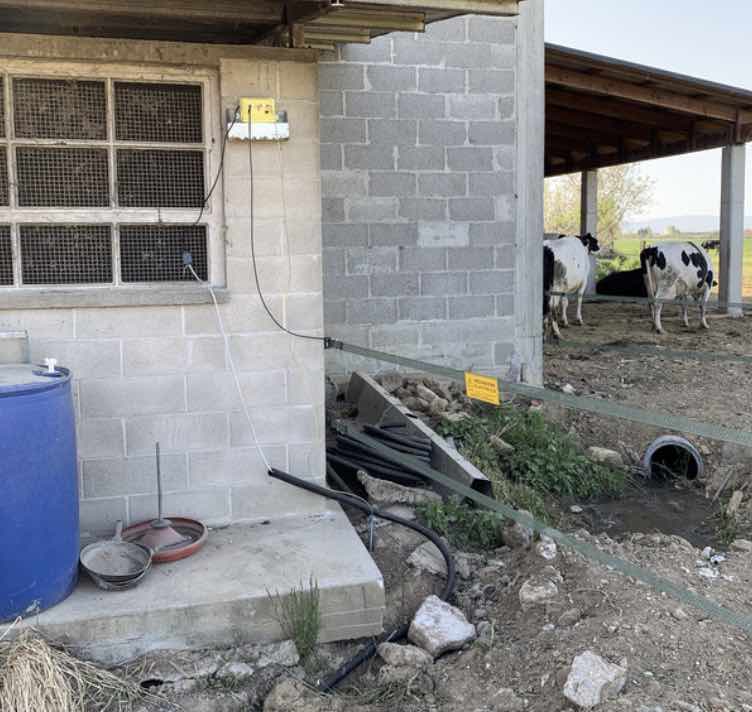
What principle is it based on?
If we put a finger in an electrical outlet hole, we don't get shocked! But if we put two in? The electrifier is designed to transform and pulse, starting from the 220 v of mains current or the 12v or 9v of batteries and cells, multiplying the voltage by 40, or much more in the case of batteries, while reducing the amperage to just a few hundredths of an Ampere.
For the system to work it consists of two wires, the first, what we will call "ground", is inserted into the ground through a special post that transforms the soil into a gigantic conductor.
The second, the phase, is attached to the tape. When the animal arrives, by touching the tape, because it walks on the ground, it connects the ground to the phase for a moment, which is why it gets shocked.
CLICK TO RETURN TO MAIN MENU
© The badifarm.com website contains photos and images that are owned and covered by copyright ©
Stay tuned! More products will be shown here as they are added.
check_circle
check_circle