No products available yet
Stay tuned! More products will be shown here as they are added.

In this section we want to show you some advice on using electric fences and some "tricks" to improve the functioning of your system.
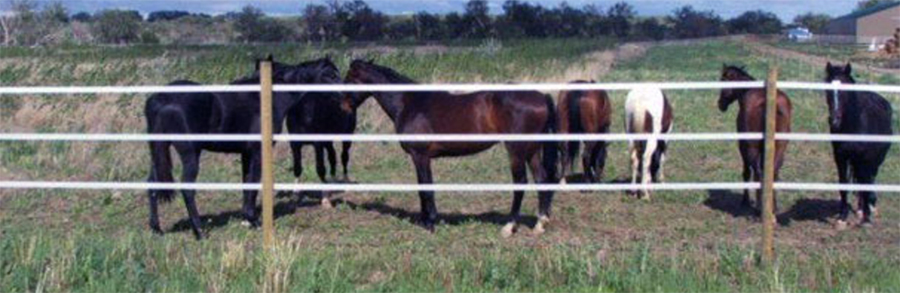
When building a fence you shouldn't be too positive! So don't plan to put all the horses together!
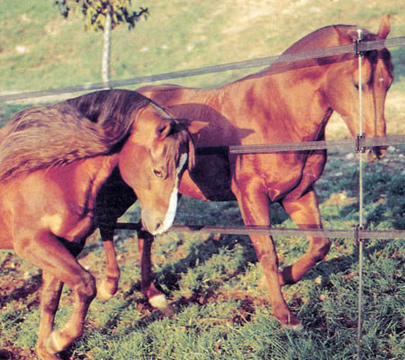
Paradise Paddock? Certainly a beautiful idea but with many hectares available! Since horses are all different from each other with different characters and needs, and in Italy very often the fences that must contain them are small: be careful not to mix horses with opposite characters. Our suggestion is to subdivide the fences so as to accommodate no more than two or three horses per section, in this way they will feel calmer and protected from the more restless and aggressive ones. Leaving your horse free in the paddock is an important part of its well-being and health: running freely, rolling, socializing, getting fresh air and sunshine. Of course, it must do so without feeling in competition with other horses.
This means that when pairing horses we should pay attention to their character, exuberance, and degree of aggressiveness. That is, if you then have to ride these horses, you would want to avoid them having wounds or anything else that would effectively prevent their use.
Tip: once some paddock partitions have been made, spend some time understanding what kind of interaction neighboring or cohabiting subjects have; if it is not enough, with our systems (R44V accessories and T-buckle) you can build further subdivisions of the fences.
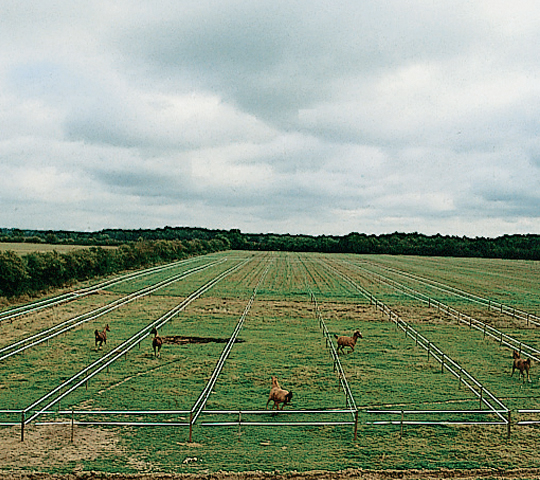
Training corridors for Thoroughbreds and horses that need to develop combativeness and movement. This fence is made up of several lanes (more than 4) placed side by side, narrow in width (from 5 to 10m) and of great length (more than 100m); two heights of tape, only at the ends you will have to put 3 for thoroughbred yearlings. It is proven that narrower lanes (4m) encourage horses to go only on the edge. The ideal would be to remove the grass that distracts the horses. Every day for 2 or 3 hours, the young horses (but also the others) are left together (one per lane) and gallop back and forth continuously, for play, out of curiosity, out of a spirit of competition and mutual challenge, etc... each within its own lane without having the possibility of injuring itself or other horses. When they no longer play, they must change places, so that they have new neighbors to confront; you can put two in the same lane (if they know each other) or you can add a slightly rebellious horse in one of the lanes, etc... Within a few months with this intense gymnastics, they will have built muscles on their own without the use of the lunge line or the need to ride them.
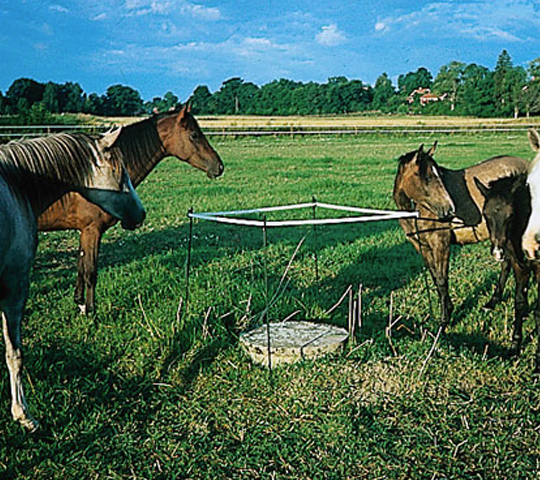
If there is a way to get hurt, your horse will not fail to be there and try... It's like that... And this explains why unlike other herbivores, a scared horse or one feeling pain, instead of stopping, even if trapped, pulls to free itself and then flees. In this regard, there is no piece of land that is safe or does not contain dangers in all seasons. Thus, to highlight a hole, a trunk, an abandoned agricultural tool or a concrete post or a place where you do not want it to enter (trees or flowers), build a fence of two tape heights around the danger (diameter of at least 1m). Electrify it if possible (battery or pile energizer) or leave it without power if your horse already knows the pain caused by the Badi Farm Shockproof Tape.
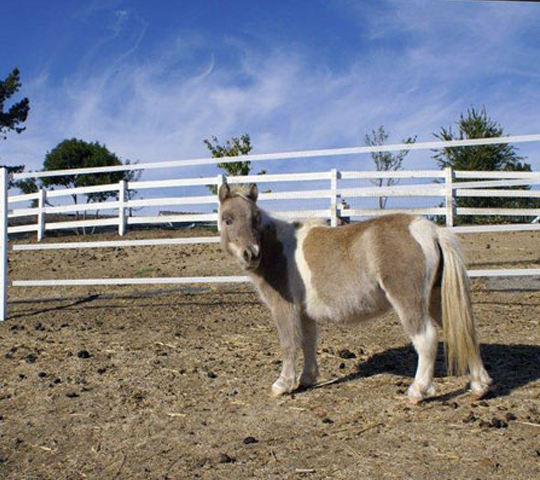
The pony is often a play horse, not a work horse. Can we expect the child to educate it and force it to respect things and places, when they are so happy playing together?
Result: it will do as it pleases and become difficult to manage in the park; moreover, Ponies are usually stubborn and hairy: this means that its mane ensures a certain insulation when it passes the tape, stubborn means that it will try to pass it whenever it can, like a rude horse. Pony owners can understand this, and I think they will agree.
The solution:
Everyone crowds around the doors when it's time to come in for the evening meal! But if the door is electrified... respect is guaranteed!
A belt of tape (1 or 2 cm) insulated with visible Ref. 10V insulators on the dividing walls will immediately have the effect of calming even the most stubborn. Very stubborn horses have been seen, but thanks to this system, they become normal horses again within a few days! For those who have a crib-biting horse, with the help of the Ref. 15 insulator, the points where it latches on can be electrified. Play it smart!
In solid but not too solid temporary stalls, they have the annoying habit of rearing up to see neighboring horses. Use 4 insulating clamps Ref. 15, and a tape at the top of the stall. For the earth connection, it is not complicated since the wet bedding will often be on a concrete floor. You can place it, if possible, on the nearby earth (outside the stall) or fix it to one of the uprights of the dividing wall if it touches the ground. For a small fence, the wet concrete will conduct the current and the earth connection very well. In these two cases, take the small battery-powered energizer Ref. E14 or Ref. E4. Test the current flow with Ref. 18.
You may be interested in:
Stay tuned! More products will be shown here as they are added.
check_circle
check_circle